In this article
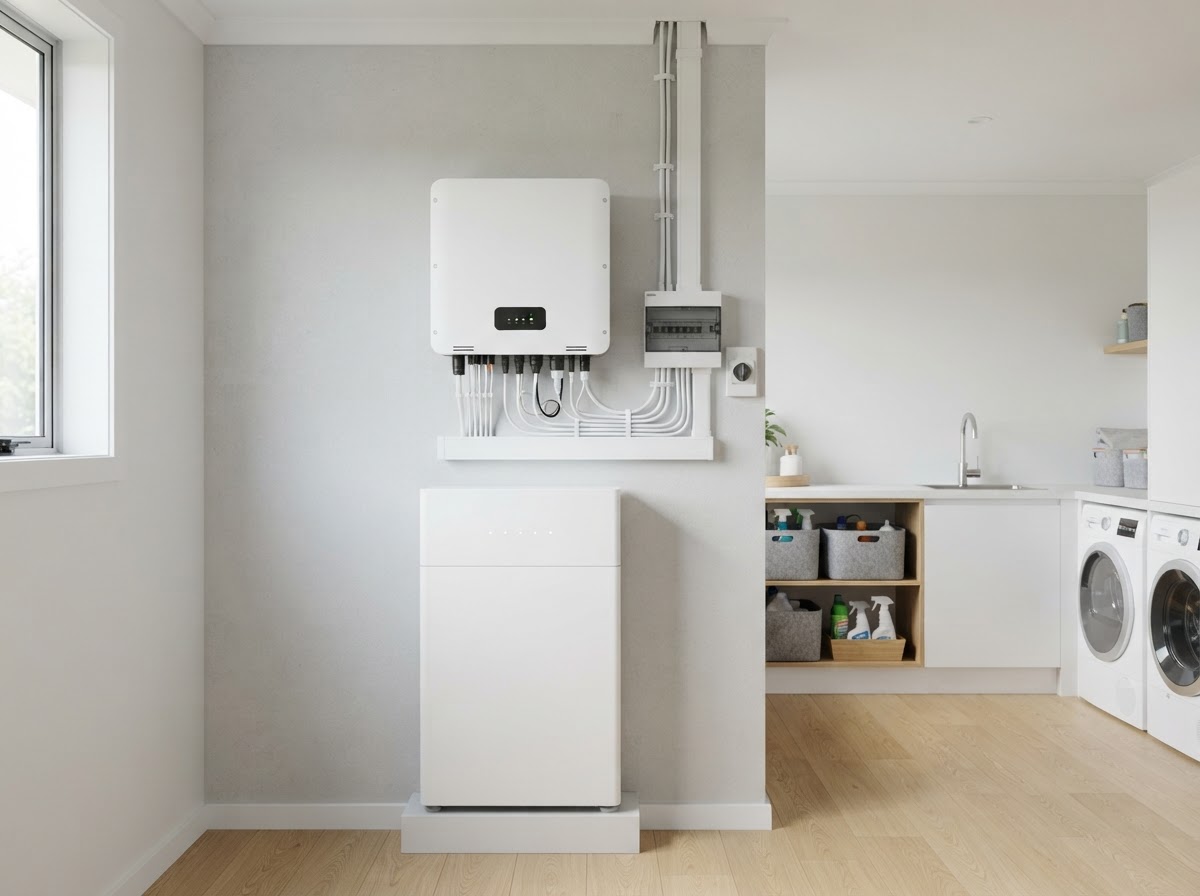
A hybrid solar system combines solar panels, battery storage and a grid connection, all managed by a single hybrid inverter. It is one of the most popular system types for Kenyan homes and businesses because it can help reduce grid consumption and provide backup power. Here is how the pieces work together.
The main components
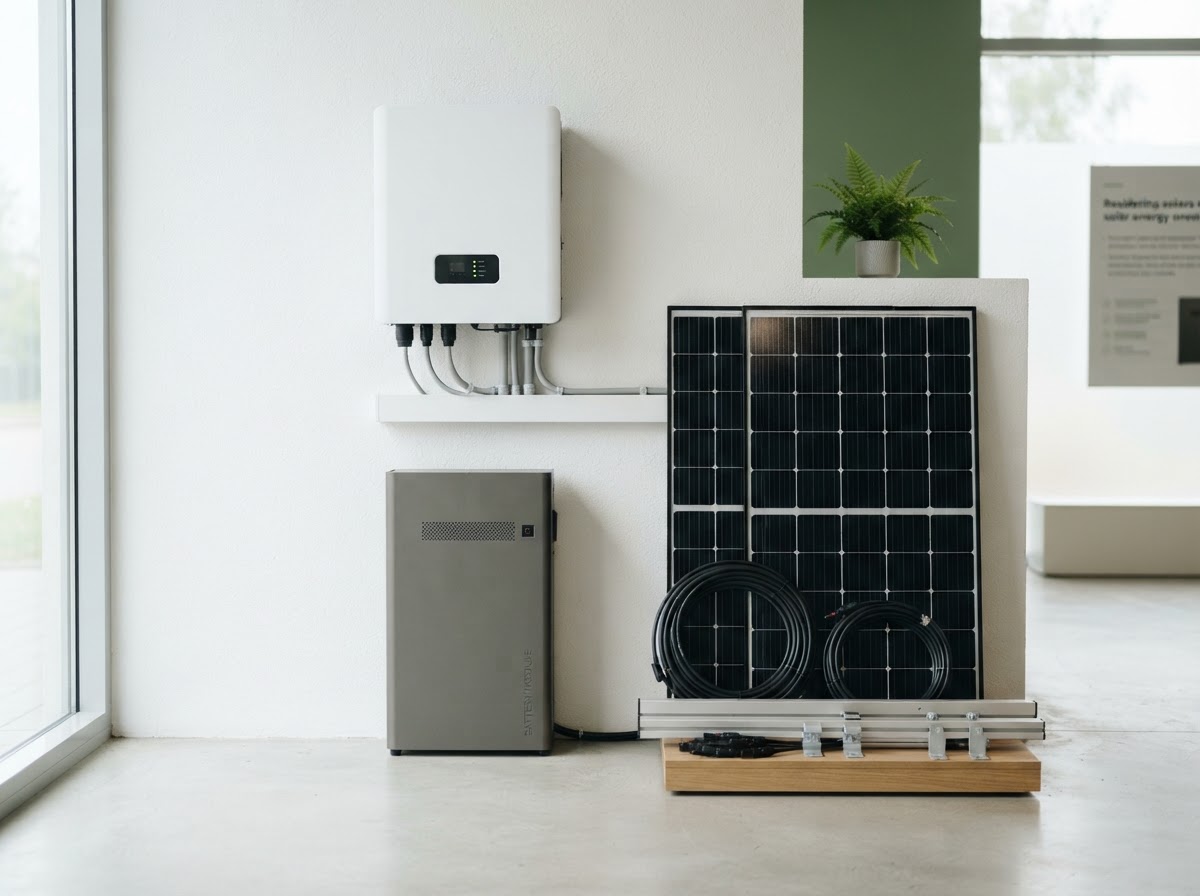
Every hybrid system is built around four parts. Understanding what each one does makes it much easier to compare quotations.
- Solar panels convert sunlight into direct current (DC) electricity.
- The hybrid inverter converts DC into the alternating current (AC) your appliances use, and decides whether energy should power loads, charge the battery or come from the grid.
- The battery stores surplus solar energy for use later.
- The grid connection acts as an additional source when solar and battery energy are not enough.
What happens during the day
When the sun is shining, your panels supply your appliances first. Any surplus can be used to charge the battery. If your appliances need more power than the panels are producing, the inverter can top up from the battery or the grid, depending on how it is configured.
At night and during outages
When solar production drops in the evening, the battery supplies the energy it stored during the day. If the battery reaches its set minimum level, the inverter can switch to grid power automatically so your lights stay on.
If the grid goes down, a correctly configured hybrid system continues supplying the connected circuits from the battery, and from the panels during daylight.
Essential loads and priority settings
Many hybrid systems are wired so that only selected “essential” circuits are backed up. This keeps battery size practical and stops high-power appliances from draining the battery quickly.
- Lighting and sockets for phones and laptops
- Wi-Fi router and TV
- Refrigerator
- CCTV and electric fence
- Water pump (where the inverter can handle its start-up surge)
Is a hybrid system right for you?
Hybrid systems tend to suit properties that experience power outages, use a significant amount of energy in the evening, or want to rely less on grid electricity.
Things to weigh up
- The battery adds to the upfront cost compared with a system without storage.
- Battery capacity limits how long backup lasts.
- Correct sizing matters — an undersized system will disappoint, an oversized one wastes money.
An energy assessment is the best way to decide whether a hybrid system suits your property, and what size it should be.
Written by
Synowatt Editorial Team
Practical guidance from the team at Synowatt Power & Solar Ltd, written to help Kenyan homes, businesses and institutions make informed energy decisions.
This article is general information. The right solar system for your property depends on a professional assessment of your energy needs and site.
Have questions about your solar options?
Talk to Synowatt Power & Solar Ltd about your property and energy needs — we’ll help you find a suitable solar solution.